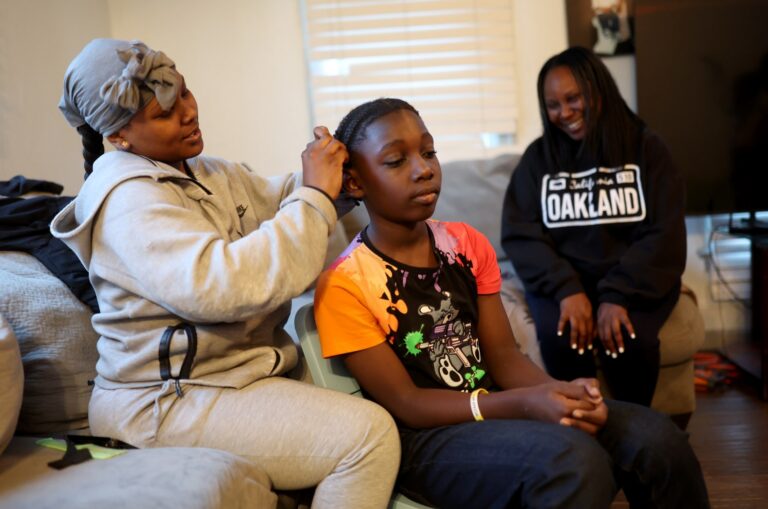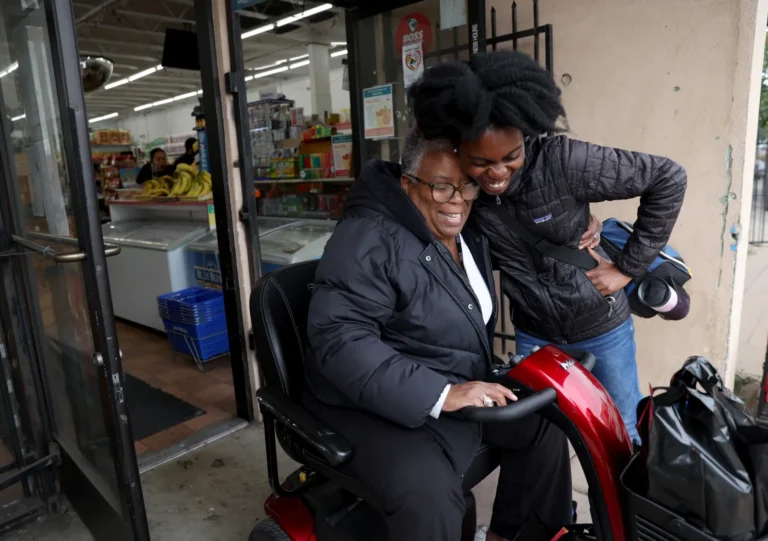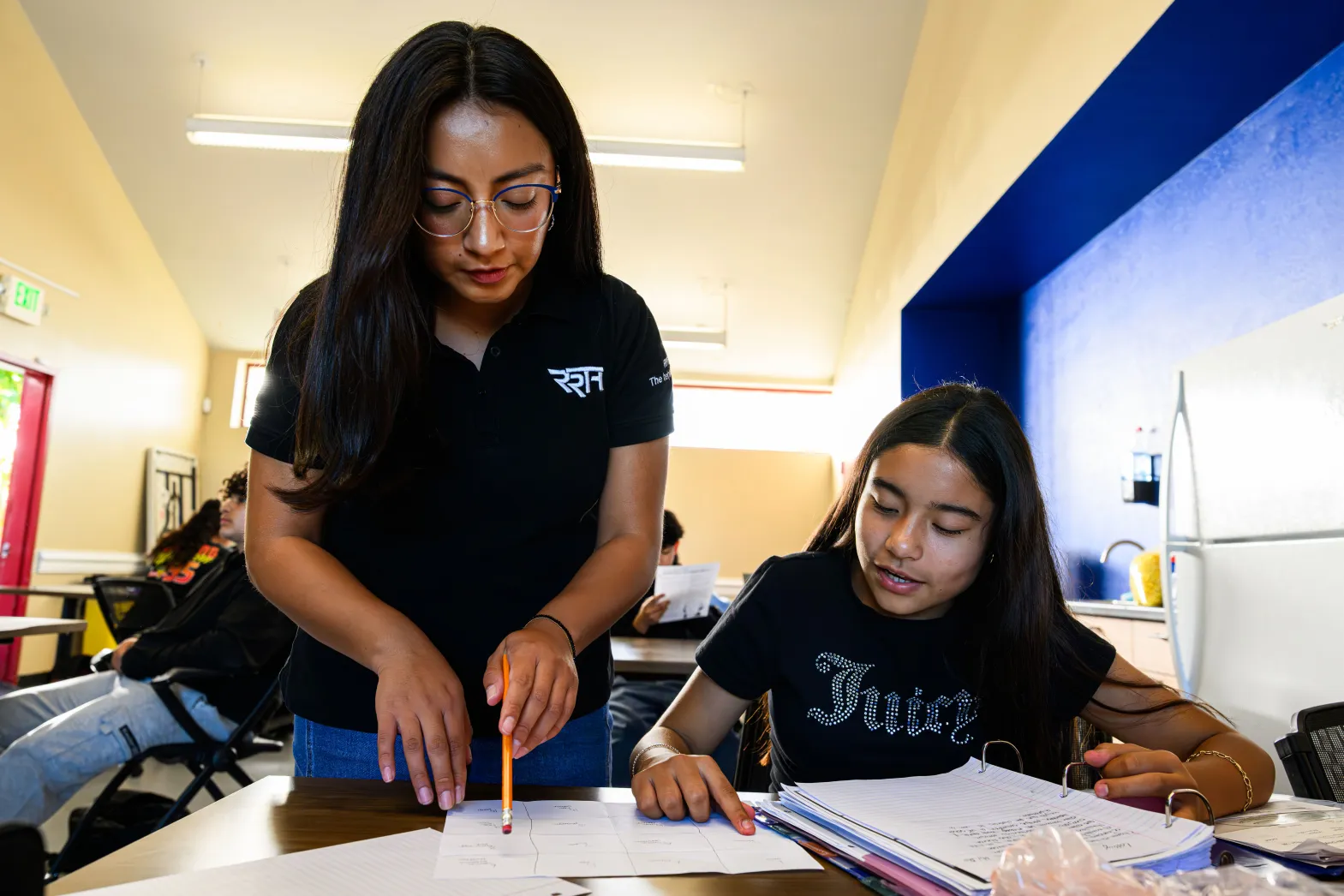

When Niseren Ayesh spotted RR Transitional Housing at a local backpack giveaway, a wave of relief swept over her.
“You don’t know [this], but I’ve been looking for you for a whole year,” she recalled herself saying, after the chance encounter in 2024 led her to the nonprofit.
The mother of four had misplaced the information and was trying to locate them to enroll two of her children in RR Transitional Housing’s free tutoring program.
Ayesh wanted to help her son, Muhanad Ayesh, now a seventh grader, as he had struggled in school for years because of writing and reading challenges.
In third grade, Muhanad was enrolled in an individualized education program at school and received occupational therapy services, but he still faced academic setbacks.
With the high cost of living, private tutoring became an expensive affair for the family of six until they found RR Transitional Housing, she said.
The Antioch mother enrolled Muhanad and daughter Fathiyah, 15, last year at the Antioch Water Park center and has not looked back.
“After getting him and my daughter into this program, my daughter is now a straight-A student. My son is no longer failing. This is actually the second year he’s able to be graded,” the homemaker told Bay Area News Group.
“He’s never been able to be graded ever. No teacher has been able to grade him except for sixth grade and seventh grade. And last year in this tutoring program, he actually won an award for most improved in reading.”
RR Transitional Housing started offering free tutoring during the COVID-19 pandemic to help students with distance learning and provide programs to prevent homelessness.
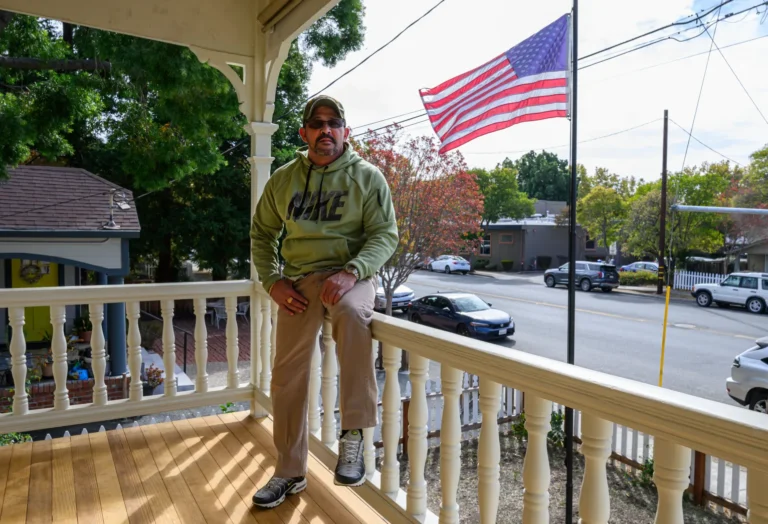
The nonprofit first started the tutoring center in Antioch as a pilot program but soon ventured to Pittsburg as people sought their services, said Executive Director Sandro Trujillo.
“Our favorite word now is pilot: let’s start a pilot, and then it becomes an actual program,” Trujillo said.
“We offer our services to everybody — we don’t turn anybody down. If they need it, we’ll find a way.”
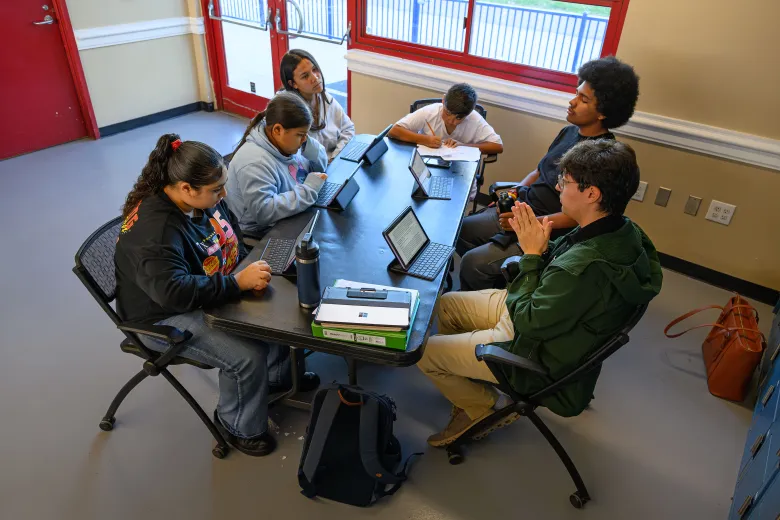
With around 250 students and four tutoring centers in Antioch and Pittsburg, the nonprofit is working on securing a fifth site, Trujillo added.
“The majority of our students come from medium household incomes, but you know we don’t turn down anybody for whatever their income is,” Trujillo said.
“If they need it, we give it to them, and we don’t ask anything of the parents. The only thing that we ask is that they focus on getting their students [children] up to speed.”
In conversations with parents, Trujillo discovered some children needed “special help” as they had learning disabilities such as dyslexia.
Some parents also shared that they had run out of options before they discovered the tutoring program, he added.
“One mom was sharing that she was told to send her son to a special camp, and you know she was not really liking the idea of sending her kid away, and she found us,” Trujillo said.
“But the student has been growing with us and has improved in his grades ever since he started working with us.”
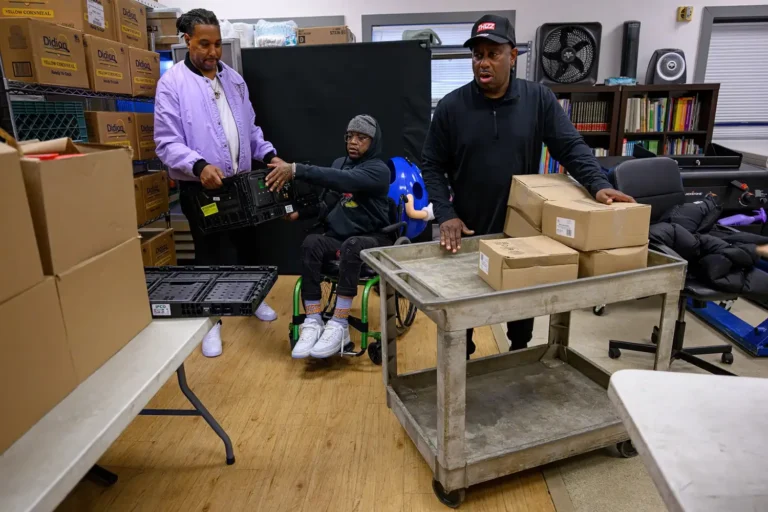
Aside from tutoring and homework support, RR Transitional Housing also offers job-readiness training, mentorship, youth development programs, and food and clothing distribution.
The nonprofit also organizes empowerment camps where students organize community projects.
“We teach them not just to receive, but also to go out and give back to their community,” Trujillo said.
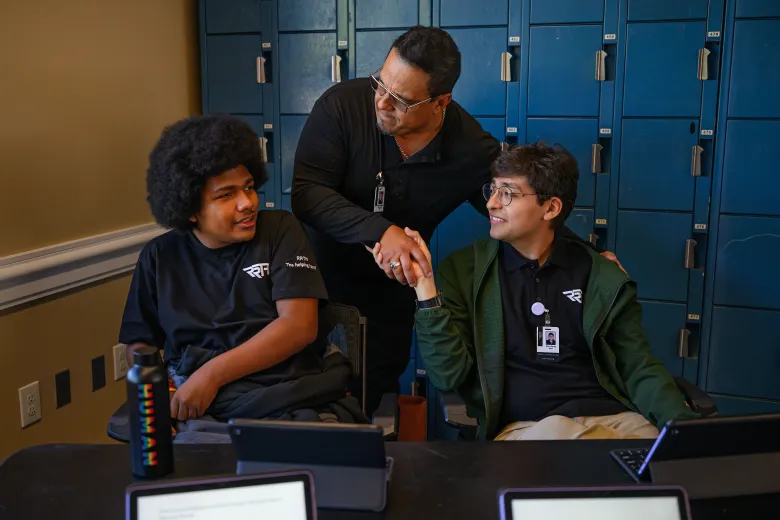
Tutoring Program Coordinator Paulette Perez said the initiative has been a “blessing” for students and families.
“It’s wonderful to see the growth of this program because from last year to this year, we’ve had tremendous and exponential growth with the [number] of kids and the parents that have also been involved,” Perez said.
Perez found out about RR Transitional Housing when her mother enrolled her younger brother in the tutoring program and encouraged her to volunteer as a tutor.
For Perez, it was an opportunity to help other students like her brother.
Inspired by her teachers growing up, Perez tries to use creative ways to help students.
The whiteboard is her favorite tool to encourage students to solve problems and reward them with stickers, candies or bags of chips.
That was also a way to identify students who have learning gaps, said Perez.
“I don’t necessarily reward based on whether [they] get it right or wrong,” said Perez.
“I’ll correct what’s wrong and we’ll talk about what was wrong and do another problem again, but try — that’s what I always tell my kids.”
Katheryne Contreras, a high school senior, joined the tutoring center because she needed help with mathematics.
Now, Contreras said she is more confident and comfortable in tackling arithmetic problems.
“They [tutors] are all attentive and wanting to help; I’ve noticed a lot of growth not only [in math] but other subjects too,” she said.
Eli Pazbolton, 15, struggled with reading in elementary school, but his mother hired a tutor to help him improve.
“Every time I answered something correctly, I would get candy as a reward, and I still remember that,” said Pazbolton.
That has inspired him to become a mentor at RR Transitional Housing, where he helps students in grades 6-12 improve their reading.
“This place encourages me, gives me motivation. This is something I want to continue [doing],” Pazbolton said.