
When Katty pushes the stroller carrying her baby, Salome, through the halls of the pediatric clinic at Oakland’s Highland Hospital, she’s all smiles.
But her path hasn’t been easy. The mom, who moved to the U.S. five years ago, and whose last name is not disclosed due to immigration status, struggled to find somewhere to set down roots, living in New York, New Jersey, Miami and Orlando before eventually finding her way to San Jose, then Oakland.
This is Katty’s second time raising a child: She’s already a mother to a 23-year-old, and with that experience comes maturity, she said. She has decided to stay at home with her baby for now while her husband works as a day laborer. As her family navigates making rent while sharing housing with another family, she’s taking the long view.
“I am a very organized woman,” she said. “I am aware that later on I will work and I will get ahead and I will be fine. For now, I have to stay calm with what I have.”
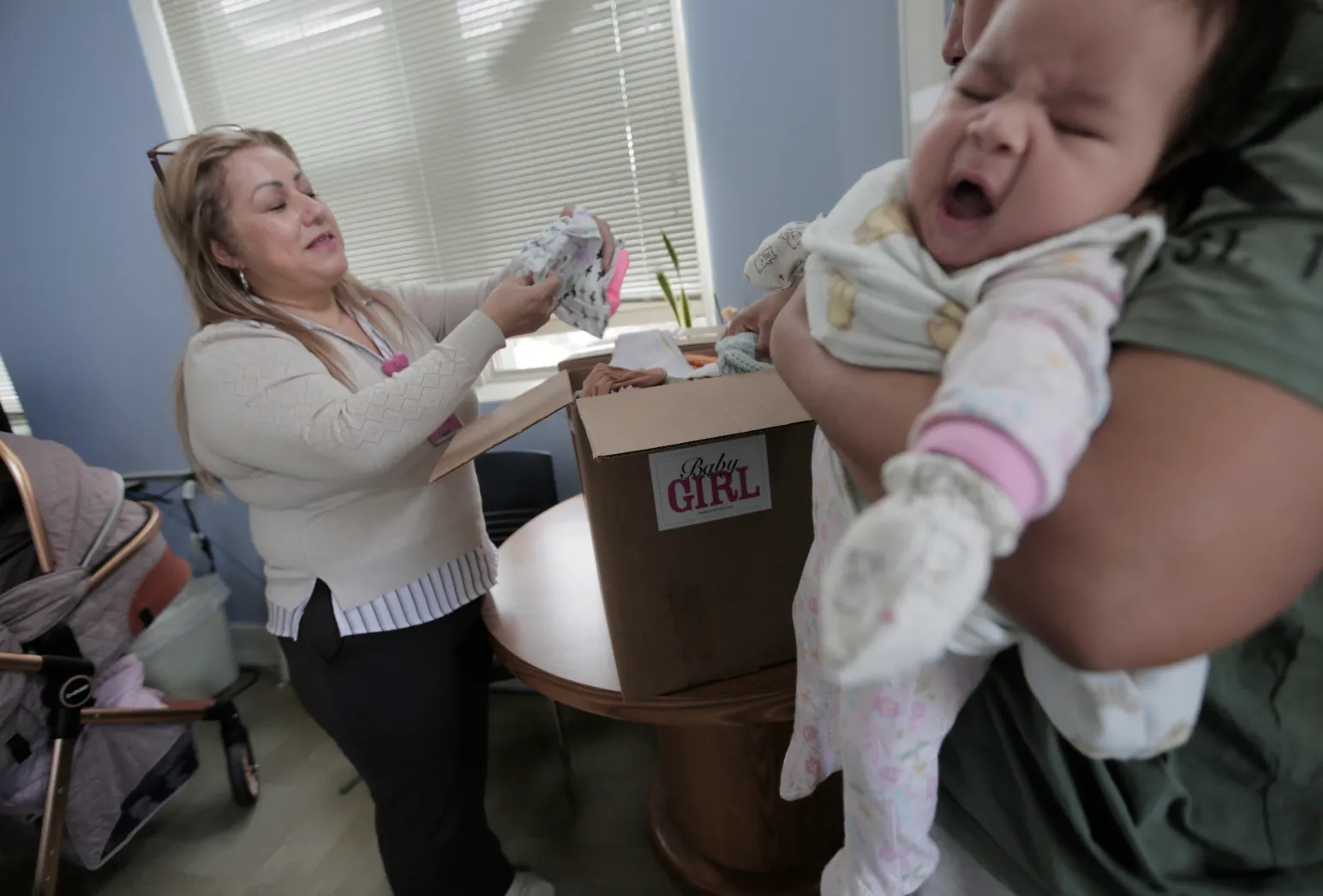
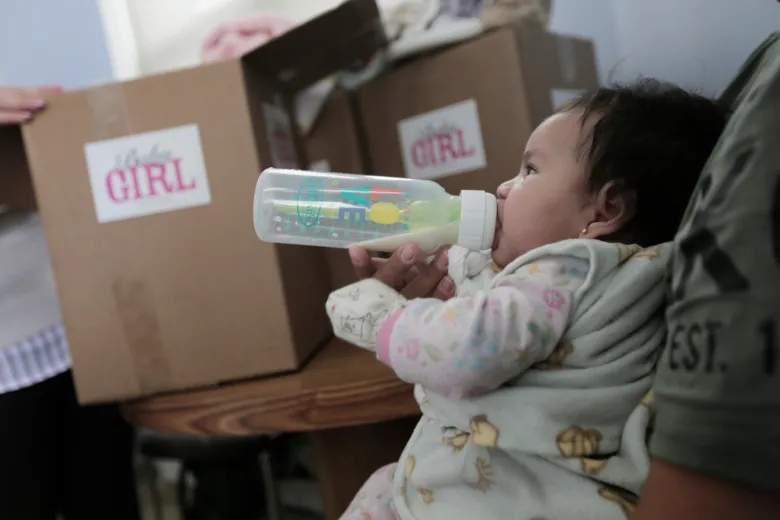
One thing that has helped her is a box of infant clothes that Katty received through a nonprofit called Loved Twice. Founded by Oakland resident Lisa Klein, Loved Twice collects gently used baby clothes, sorts them into boxes and distributes them to East Bay agencies that give them to families in need. Each box will clothe an infant for his or her first year of life.
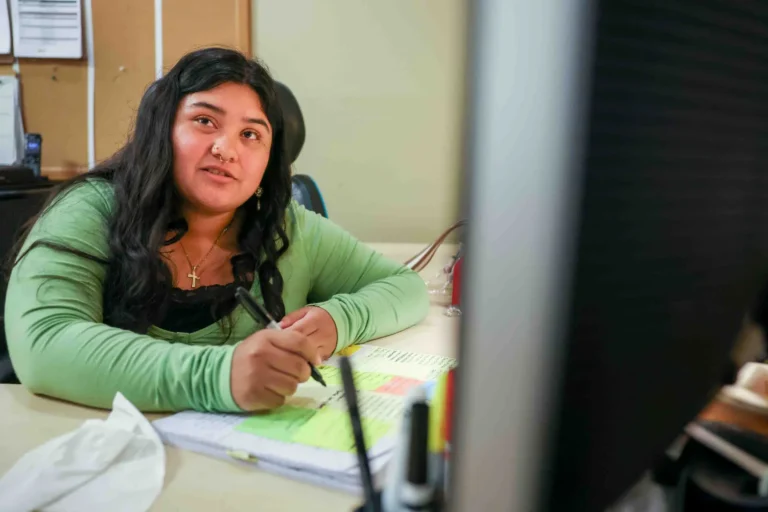
Facilitating the handoff of the box of baby clothes for Katty and Salome is Amalia Jauregui, a pediatric caseworker, who greets Katty in Spanish at the Highland Hospital clinic. Jauregui is a senior family specialist with an initiative called Project DULCE, which stands for Developmental Understanding and Legal Collaboration for Everyone.
Part of the First 5 program, Project DULCE embeds health workers with pediatric care teams to support families with infants through their baby’s first six months of life. It also connects the families to resources such as legal support from the East Bay Community Law Center, public benefits like CalFresh and clothing boxes from Loved Twice, which directly help families at a vulnerable time, when many parents are unable to work while they have an infant at home.
Jauregui talks to families, and if they identify baby clothes as a need, she provides them with a Loved Twice box. From her end, it helps that the boxes come ready to deliver, without any additional work needed to sort the items herself.
“That’s why it’s so important to have this collaboration with Loved Twice,” she said. “Because the families that I’m working with are in high economic need, and giving them this opportunity to have clothing for up to 12 months is one less stressor for them.”
Katty explained in Spanish that she and her husband had purchased some baby clothes before Salome arrived, but they didn’t keep her as warm as they expected. A Winnie the Pooh sleep sack from the Loved Twice box in particular helped to soothe the fussy infant. “Ever since I put it on her, she doesn’t cry, because she used to cry and cry,” Katty said.
The supplies also help to keep little Salome clothed as she grows quickly.
Twenty-one years ago, Loved Twice founder Klein was a new mom to her own baby, Calli, who kept outgrowing her clothes. After Hurricane Katrina struck on Aug. 29, 2005, Klein saw images of moms walking to New Orleans’ Superdome carrying babies and going to sleep on cots there.
“My heart just went out for these babies and the new moms, and I wanted to help,” she said.
So Klein looked for opportunities to help on New Orleans Craigslist and saw that a church was asking for donations to aid 50 families there who had shown up with nothing but their wet clothes. One thing they needed? Baby clothes.
“That’s exactly what I can do,” she recalled thinking. She dug up her collection of newly outgrown baby clothes in the attic of the Rockridge home where she lived at the time and contacted the 15 other people in her moms group, asking them to also donate baby clothes for the hurricane victims.
“In four days, I got 200 pounds of clothes,” Klein said.
The group assembled and discussed how best to package their haul. They decided to create boxes of separate girls’ and boys’ clothing styles, each with a complete set of clothing for newborns to 12-month-olds, and shipped them off. After receiving a postcard that the boxes had been safely delivered in New Orleans, she thought the project was done.
That was until the next day when a Pampers box showed up on her doorstep. It was full of baby clothes.
She called off the moms group, but none of them had left the box. As it turns out, somehow word of mouth and the internet sharing of her post had morphed her original message: When she checked the Bay Area Craigslist website, her address had been reposted in a message saying she was collecting baby clothes for homeless families in Oakland, not Hurricane Katrina victims.
In possession of a fresh batch of clothes, she called Oakland’s Highland Hospital and asked if they could use them. They could. So she drove over with her own baby in the backseat and dropped off the boxes, feeling great about the second-round act of service.
But the clothes kept coming.
Straining under what had become a one-woman clothing repurpose operation, she allied with a local kids’ hair salon to create a collection bin, then expanded to the salon’s other locations, and partnered with other recipient organizations and individual and corporate volunteer programs.
By 2009, the initiative had grown into a tax-exempt nonprofit, and as the years have passed, she’s amassed an army of nearly 1,000 volunteers and partnered with companies like Google, Goop, Chevron and Clorox to sponsor baby clothing sorting events to build boxes for organizations throughout the East Bay, including UCSF Benioff Children’s Hospital Oakland, Alta Bates Summit Medical Center and many others.
Each box holds about 100 garments needed to support a baby’s first year, including sleepers, socks, bibs, hats, tops and bottoms, according to Klein. Most of the moms who receive the boxes make less than twice the federal poverty limit, or around $31,920 for a one-person household or $43,280 for a two-person household.
The kits are intentionally not too bulky or overloaded because of the precarious positions that many of the receiving parents are in — some may lack stable housing and sleep in cars, garages or tents with their babies, and have limited storage space.
“We just want to make sure the baby has adequate clothing,” Klein said.
Since she started the initiative, the need for her service has only grown.
“When I started, it was a challenge to try to find homes for these boxes,” Klein said. “Now we have a waiting list a mile long from agencies that want clothes.”
Loved Twice currently distributes about 3,000 boxes per year, but it could easily distribute double that if it can acquire more of each of the three things that make the nonprofit run: clothes, funding and volunteers, she said.
The nonprofit relies heavily on gently used baby clothes — about 99% of what it distributes is reused. Baby clothes tend to retain their quality even secondhand, since their wearers aren’t very mobile yet or eating solid foods, Klein said.
More than 20 years in, the one-time project that grew into a nonprofit has helped her grow as a person as she’s learned to write grants, wrangle Excel and delegate, Klein said. It also helped her to raise grounded kids, she said.
More than that, though, it’s given her a sense of purpose.
“We’re helping all these moms. We’re helping all these babies. We’re saving all these clothes from the landfill,” Klein said. “We’re allowing the new mom, with her limited resources, to be able to buy food, to be able to buy diapers, to be able to maybe buy gas for her car, to just live. The clothes are one less thing to worry about for her.”