
In 2019, Aidan Hughes’ wife, Jeanne — a nonsmoker — was diagnosed with stage 4 lung cancer. Even in his state of shock, Hughes knew one thing: Jeanne would need serious help and, just as crucially, a place well-prepared to offer it to her.
Hughes’ research led him to an address in the Contra Costa County community of Alamo that, from the outside, looks like any other pleasant suburban home. It’s called the Bruns House, operated by Hospice East Bay, and it provides six private rooms to hospice patients whose symptoms cannot be managed at their own homes.
There soon came a time when Jeanne’s condition had deteriorated enough that in-home care wasn’t enough. She moved into the Bruns House. Hughes recalled a nurse there explaining that rather than him always taking care of her, specialized nurses would tend to her needs.
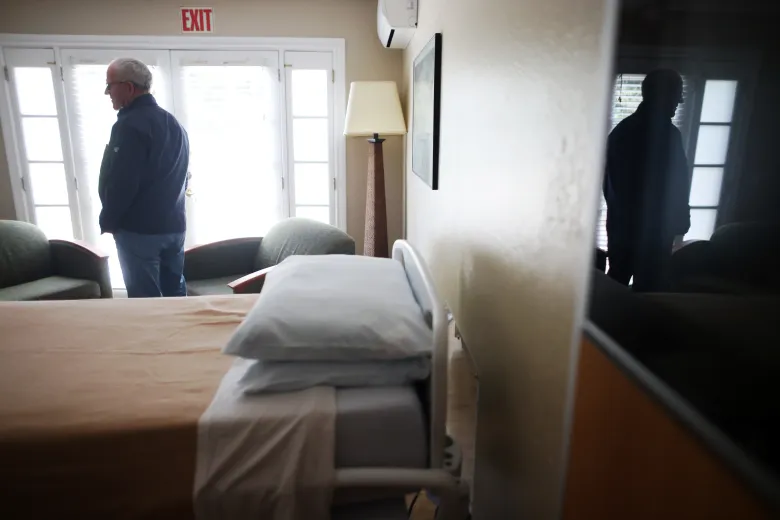
“I hadn’t visited the Bruns House in advance, so that was my first time experiencing what it was like,” says Hughes, who’s 66 and lives in Walnut Creek. “While Jeanne was taken to a room and was being cared for, the staff showed me the facility. They had a seating area where visitors or loved ones could take time out and relax. They have a large kitchen that is fully fitted out, where you can make your own meals, with coffee and tea and so on. In a way, it was like being taken care of in somebody’s house.”
The staff set up a small bed in his wife’s room – the house offers unrestricted visiting hours – and Hughes stayed until the inevitable happened, in the winter of 2021. While the memories of death are painful, he believes it could have been worse, had it happened outside the managed environment of the Bruns House.
“It wasn’t only about a medical experience,” Hughes says. “It was about caring for the loved ones, and creating an environment where people can die with the dignity and quality of life that they deserve. That gave me a lot of comfort, because if this had been at home, I don’t know that Jeanne would have had the same quality, dignified experience.”
The Bruns House was founded in 2004 when George and Sue Bruns – whose name graced Orinda’s former Bruns Amphitheater – made a donation to Hospice East Bay in the name of their son who’d died in an accident. The organization used the money to purchase a home in Alamo and convert it for hospice care. The Bruns family later helped pay off the home’s mortgage, granting the hospice more freedom in its mission to focus on patients.
The house provides round-the-clock inpatient care for people who require acute-symptom management – things like pain, nausea, anxiety and seizures. It has cared for more than 3,000 patients and their family members since its founding. It also provides temporary “respite care” – several days of professional help for patients, when their caregiver needs a break – and a place to go when people aren’t allowed to die at home, for personal or cultural reasons.
The Bruns House is among the only licensed hospice houses in the Bay Area. It is also a nonprofit, in an industry that is quite for-profit – sometimes, too much so. This year saw a six-month federal moratorium on Medicare enrollment for hospices nationwide, pushed by Vice President JD Vance, ostensibly because of the amount of fraud in the business.
Why aren’t there more hospice options like the Bruns House?
“It takes a tremendous amount of financial support,” says Laura Bakar, the house’s director. “Our (government) reimbursement is not enough to sustain what we do here, and so we rely very heavily on community support.”
“It is very, very expensive. Medicare only pays a small portion for each visit, so the cost is not necessarily covered,” says Ann Mimiaga, development manager at Hospice East Bay. “Some people pay privately because they want to be there. Then we have a charity fund. At one point, there was a homeless gentleman that was dying and didn’t have anywhere to go, and we just took him in. It’s not a lucrative way to care for people.”
At its most basic level, the Bruns House is exactly that — a real house. “When people come here, they just feel an instant sense of home,” Bakar says.
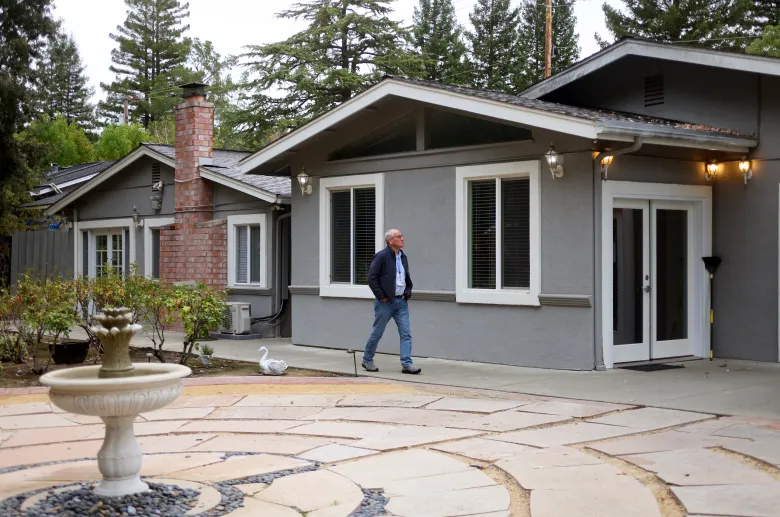
“Then we have an RN on staff 24/7, and we have three shifts a day,” she says. “We have hospice aides that provide personal care. … We work as an interdisciplinary team, so we also have social workers, spiritual care, physicians, nurse practitioners, consulting pharmacists. We have wonderful volunteers that support our patients and families.”
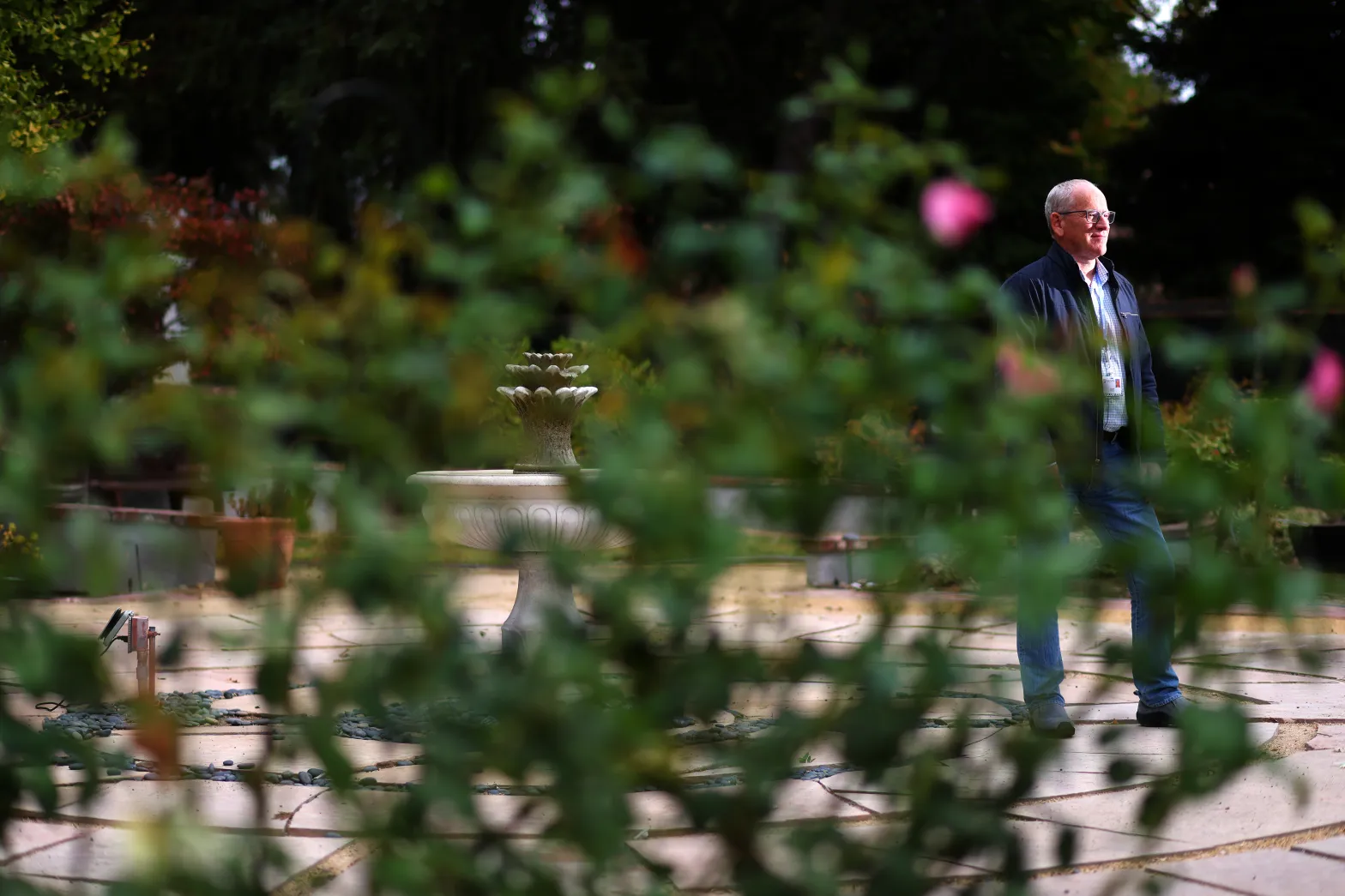
Patients can spend time with dogs and cats through the hospice’s Pet Pals program. If they served in the military, the hospice can link them up with veterans who visit bedside to hold pinning ceremonies or sing the national anthem. In the yard, there is a quiet garden with a fountain and a labyrinth for contemplative journeying. Families can purchase bricks with their loved ones’ names to place in the garden and honor them each year at a ceremony with live music.
Families of people who’ve entered the Bruns House sometimes come back there later in life, when it’s their own turn to consider hospice care.
“We had a wife whose spouse died last spring, and it gave her a great peace of mind to come here when she received her own diagnosis. She knew her prognosis was very short, and she told her family she wanted to come,” Bakar says. “And we recently had a patient whose mom died in the exact same room she was in. That was important to her — she felt that this is where she wanted to be in her final days.”

After Jeanne died, Hughes spread her ashes at sea near the Golden Gate Bridge. Reflecting on the Bruns House experience, he became a donor to the hospice and started volunteering in support of patients and caregivers. This year, he even joined Hospice East Bay’s board of directors.
Hughes also bought a brick to put in the garden because he wanted a place where he could physically remember his wife. “It was important to do it there because that’s where she passed: She was peaceful when she passed, and it was peaceful in the garden.”