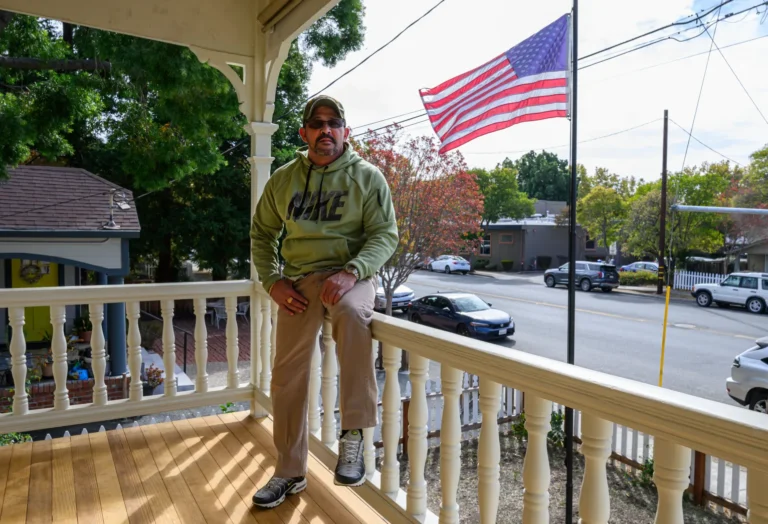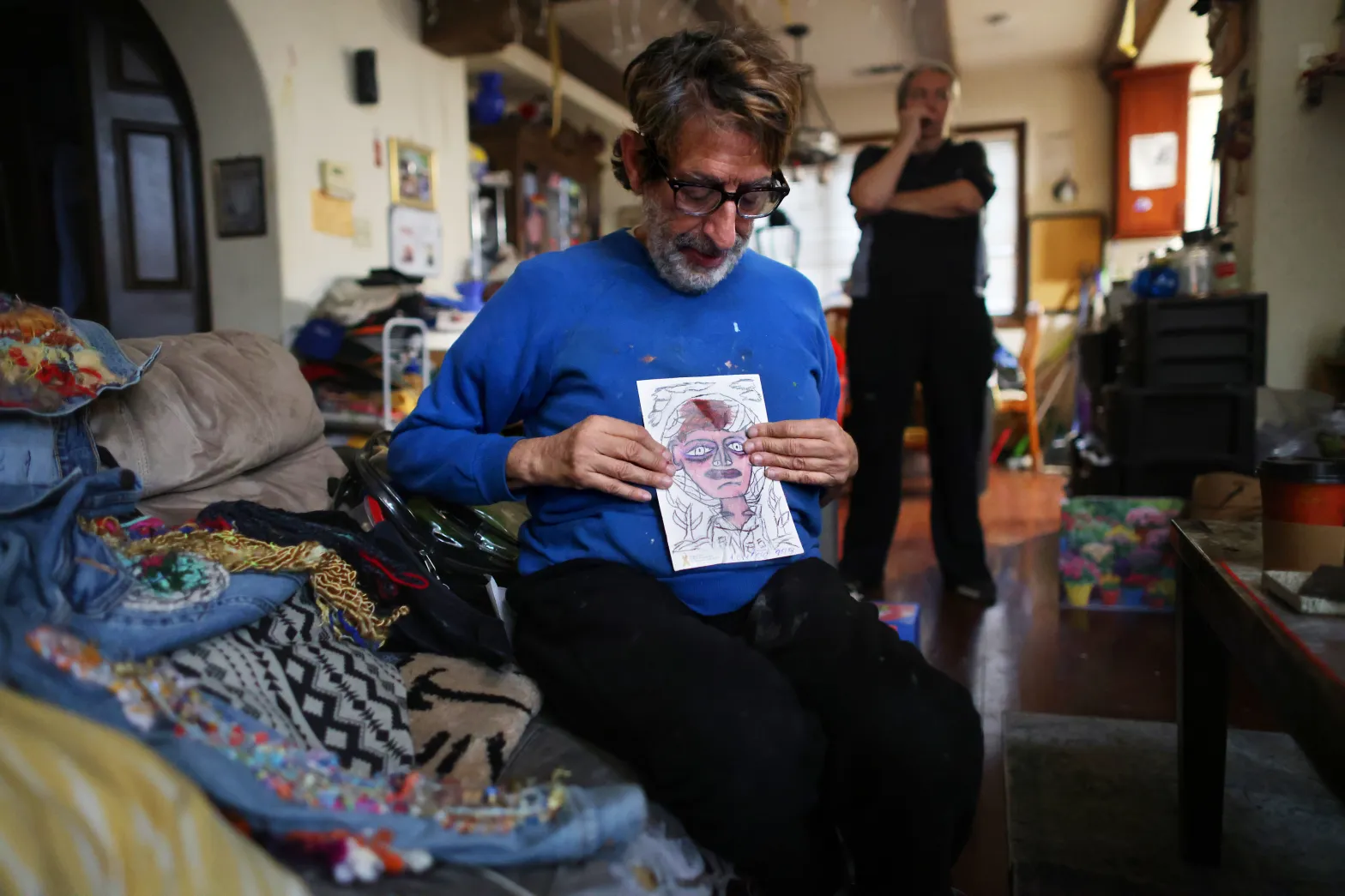

The gadgets dot nearly every room of Jorge Gomez’s apartment.
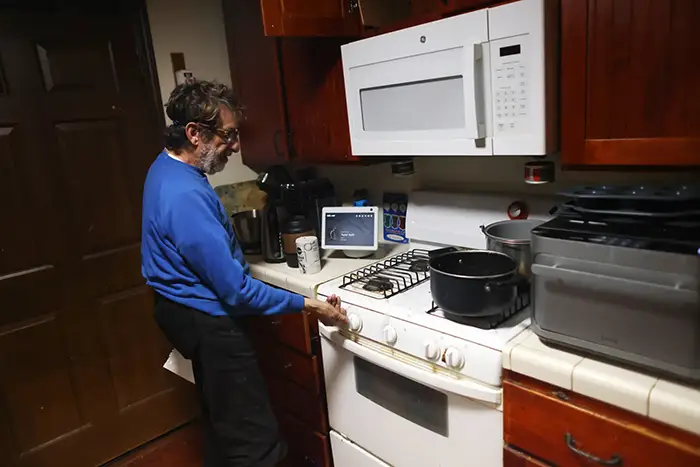
One machine rests on a desk in his living room, automatically dispensing medication for the day. In the kitchen sits a specially designed countertop oven: Cameras inside the device stream video to a remote caregiver, ensuring he won’t burn his food. Even the front door has a sensor-activated recording, reminding him to bring along his keys.
It’s all thanks to the work of a single nonprofit, East Bay Innovations, that is helping pioneer a new way for people with developmental disabilities to become more independent in their homes, without the constant presence of a caregiver. In Gomez’s case, the nonprofit organization has aided him through its Assistive Technology program, which is expected to expand markedly after a pilot program operated through the California Department of Developmental Services showed that participants felt safer and lived more independent lives with the program.
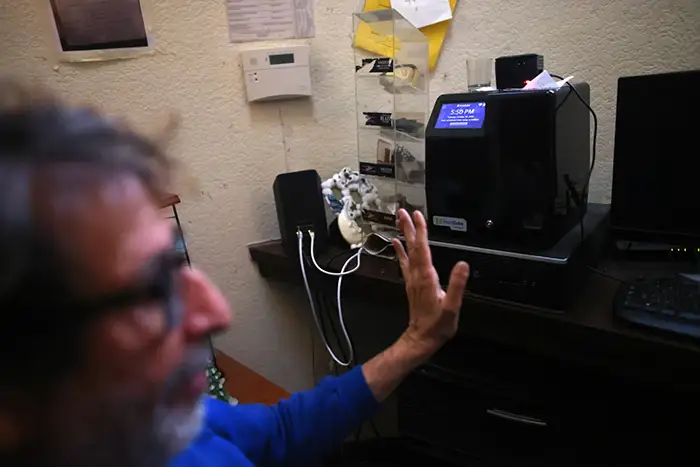
The concept: Equip people with cutting-edge technology that could reduce the need for a professional caretaker to live with them 24 hours a day, seven days a week. For Gomez, 70, that includes a fire-suppression system above his stovetop, and a speaker system that blurts out regular reminders to pack his lunch for the day or to take out the garbage.
Plastered to the wall in his kitchen is a large push button that can automatically summon an Innovations staff member should he ever need help or find himself in an emergency.
The tapestry of safety precautions helps ensure that Gomez remains safe while caregivers are away, while providing him a long-sought peace of mind. As a result, he now spends about 15 hours a week alone at or near his apartment, doing art, going on walks and doing other household chores, like watering his plants.
“It feels nice,” Gomez said. “I feel real safe.”
That’s all by design, said Serom Sanftner, a longtime staffer at the nonprofit who is expected to become its new executive director in January. Finding people to fill those roles of direct support professionals — essentially, in-home caregivers who provide job and life-skills training — is exceptionally difficult. More important, though, is the lack of freedom for the nonprofit’s clients that can result from always having someone else live in their home, watching over them.
“It’s core to humans that we have the ability to direct our own lives,” said Sanftner, the organization’s associate executive director. “Having a will is part of human nature. And you can tell in institutional settings, prior to people having that, it is stripping them of their humanity.”
“We don’t agree with that — that’s not the way we view humanity and life and services,” she added.
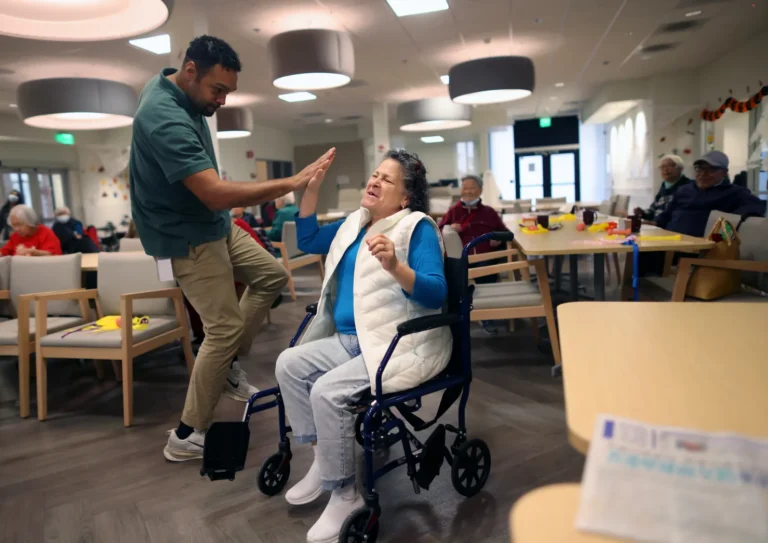
East Bay Innovations has been pioneering new ways to gain that independence for more than 30 years. Founded in 1994, the nonprofit became an early leader in the supportive living movement that sought to move people out of institutions and into their own homes in the community — operating at a time when “the whole idea of ‘People can live in their own homes and direct their own lives’ was still relatively new,” Sanftner said.
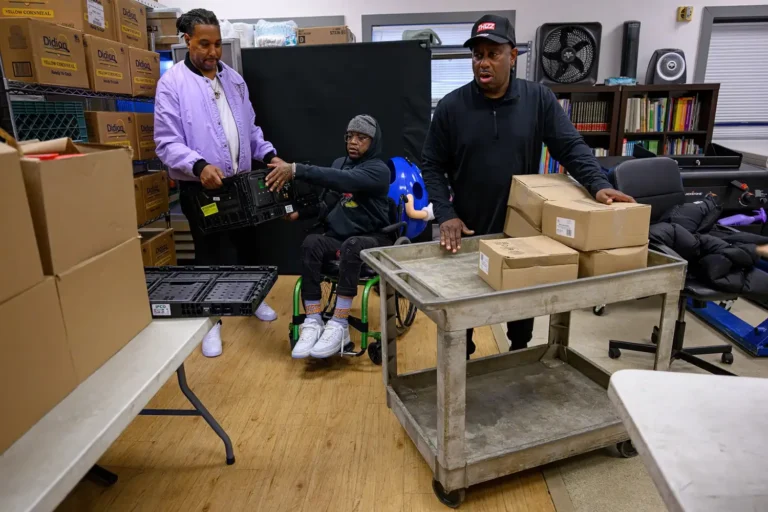
The nonprofit now employs some 250 people — many of them direct support professionals — on an annual budget of $19 million, which includes providing a wealth of services to about 1,000 people a year throughout the East Bay. That means being the primary tenant referral organization for more than 100 units across Alameda County, while also providing a community-based day program and a Medi-Cal program helping hundreds of people transition from living facilities back into the community.
Now, the nonprofit plans to launch a “lending library” of equipment for its Assistive Technology program, one including medication dispensers, smartwatches, fall detection sensors and stove and microwave shut-off mechanisms.
The demand for that equipment is great — Gomez is among only 10 people in the Bay Area currently with access to the trove of devices made available by East Bay Innovations through a pilot program funded by the California Department of Developmental Services. Yet a waiting list of more than 20 people has developed among other clients at the nonprofit who want access to that equipment as well, despite the nonprofit’s inability to cover the costs itself.
Once stocked, the lending library could serve as a critical bridge to the expected expansion of that pilot program, ensuring that clients are well-trained on the technology and already able to use it by the time state funding flows to the nonprofit.
“There are so many instances where I want to be able to support clients with a device, even if it’s for a little while,” Vanessa Bull said. “The need is there, the need exists and the interest will only increase as well as time goes on.”
Sitting in his San Leandro apartment on a recent Tuesday evening, Gomez showed off a wealth of art projects filling his home, some completed in those quiet hours that he finally enjoys alone. There’s a denim jacket adorned with kaleidoscopic threads of yarn, marbles, buttons and bells, along with paintings and drawings of dogs, hot air balloons and even himself.
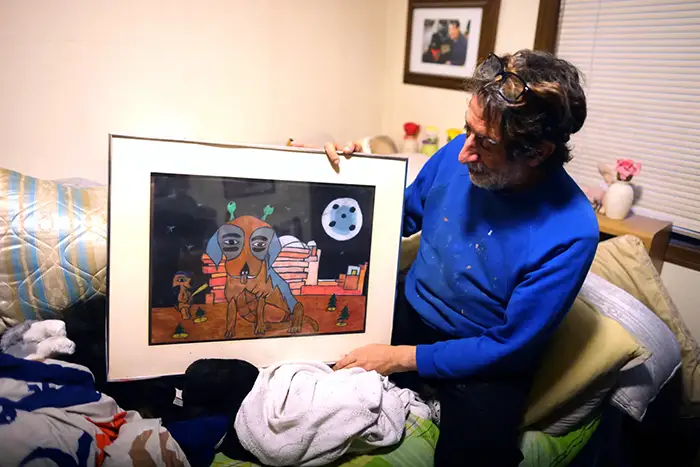
All of them were completed using a special weighted sleeve supplied by the nonprofit that wraps around his wrist and helps Gomez steady his hands, which sometimes shake with uncontrollable tremors. He’s already made paintings and other works of art that have sold after being displayed at local shows.
As Bull sees it, it’s a vital chance for Gomez to express himself without barriers.
“It definitely supports him emotionally, it supports him mentally,” Bull said. “It’s like an organ of his, to have access to his art and self-expression.”