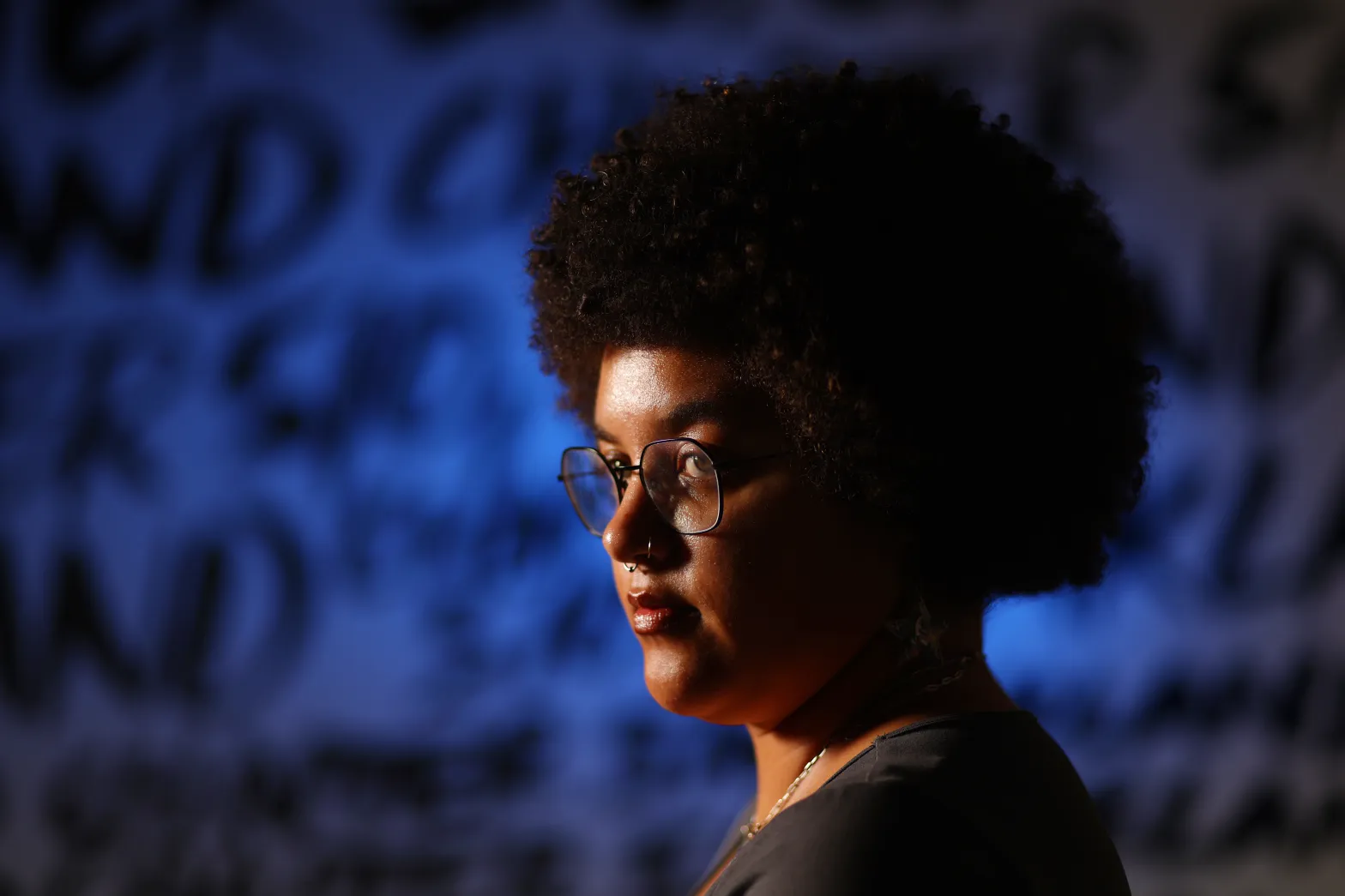

On a corner of a quaint downtown street sits Chapter 510 Ink, a youth writing center that has helped thousands of young people with powerful stories become published authors.
From its programming to its decor, the center and its shop, the Dept. of Make / Believe, invite visitors to explore their curiosities.
Under a tree decorated with hand-written spells encouraging positivity and hope is a phone that connects the caller to pre-recorded poems, songs and advice. Gumball machines dispense affirmations and writing prompts. Visitors are invited to file away their own worries, thoughts and manifestations at the shop.
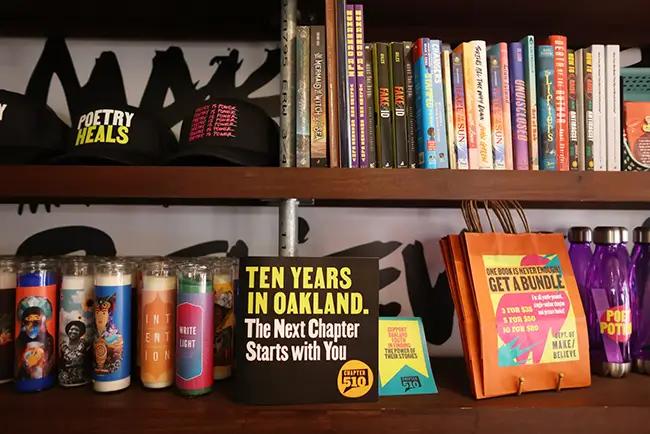
Of course, the space is also filled with books, many of which are filled with the writings of Oakland’s young people. Chapter 510’s latest publication is “When the Stars Bloom in Oakland,” a Spanish and English bilingual anthology of poems by local fourth graders who explore themes of change, familial love, friendship and the great outer space.
“It’s really inspiring,” Bean Tupou, the organization’s director, said. “It’s always delightful and inspiring seeing kids come out of their shells, and the poetry is really moving.”
Those pieces were crafted in eight classrooms across Oakland Unified School District, as part of the organization’s first Young Oakland Poets Expedition. Eventually, Chapter 510 envisions poems being written by all fourth graders across the district at the same time.
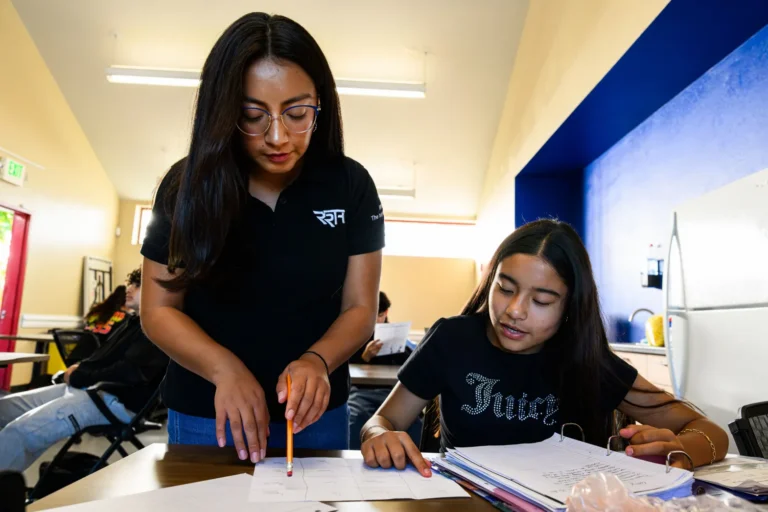
The authors featured in “When the Stars Bloom in Oakland,” are among the thousands of students whose writing abilities were shaped, in part, by Chapter 510. Since the organization’s inception in 2013, Chapter 510 has mentored more than 6,000 youth from age 8 to 18 in classrooms and during free or low-cost writing workshops.
Seeing their work published understandably allows for young people to dream up a life of possibilities, according to Tova Ricardo, a current Chapter 510 board member. But it can also be a healing source of pride for their families.
“There is something that’s really important about young people being able to see their writing published,” she said. “Not just performing on a stage, but literally seen in books.”
Under the tutelage of co-founders Janet Heller and Tavia Stewart, Chapter 510 has grown from a free poetry workshop and college essay support program in schools and libraries, into a creator space focused on serving Black, Brown and queer kids.
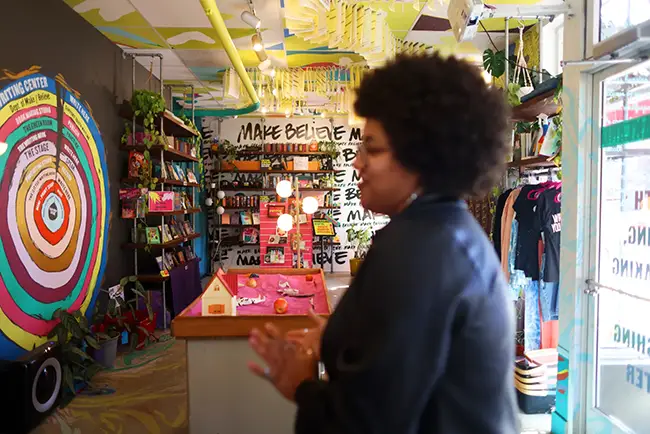
The organization began publishing students’ work in 2014, and opened its first brick-and-mortar center on Telegraph Avenue in 2015. Five years later, Chapter 510 moved to its current location in Swan’s Market amid the pandemic, continued to offer programming online, and eventually opened its youth writing, bookmaking, and publishing center to the public.
In its decade of operation, Chapter 510 has published more than 100 books featuring the writings of Oakland children. It’s provided meals and arts programming to West Oakland families when teachers went on strike in 2019. The nonprofit has launched podcasts and speaker series, and partnered with hundreds of mentors, organizations and institutions to bring services to kids from a variety of underserved backgrounds.
“Chapter 510, to me, feels like a very communal experience,” Ricardo said.
“It’s not that I’m just doing this alone. I’m doing it with other people, and so you’re able to both grapple with and try to understand what’s going on in the world, how it relates to you, but you’re also able to just focus on what is immediately going on with you, and how to allow this, not to just be an escape, but to let this be an authentic expression of yourself.”
Ricardo knows well the impact that Chapter 510 can have on a young person’s life. At the age of 16, she became the 2015 Oakland Youth Poet Laureate, and through winning that title, was introduced to Chapter 510.
She participated in the workshops, had her work published alongside her peers and built up her public speaking skills performing live and acting as emcee for an open mic series at Oakland First Fridays, a monthly arts festival in the city.
“It felt like unconditional support,” Ricardo said. “I was around both young people and adults who wanted to see me succeed, but also wanted me to embody the best version of myself and to feel empowered to say what I wanted to say without restriction of feeling like I had to censor myself.”
Though always a strong-willed and outspoken child raised by educators, Ricardo said Chapter 510 helped her cultivate bravery and confidence. The skills were integral as she used poetry and spoken word to explore how gentrification was changing the area she grew up in and the intersections of her identity as a Black, queer, Jewish woman coming of age in the United States.
Writing allowed Ricardo to connect deeper with herself, her ancestors and her surrounding community, she said. It’s helped her balance the “bitiness” she felt as a teen eager to prove herself with the soft comfort she now feels in her identity.
Regardless of whether Chapter 510 participants pursue literary careers, Ricardo said the skills they learn at the center — introspection and curiosity, among them — are invaluable tools for future adults.
“There are always going to be things in life that, as you get older, are going to make you feel small,” Ricardo said. “Just having even this, just the memory of being in a place like Chapter 510, in this building, can remind you of who you are. It reminds you of the young person that you are fighting for, and it’s yourself.”