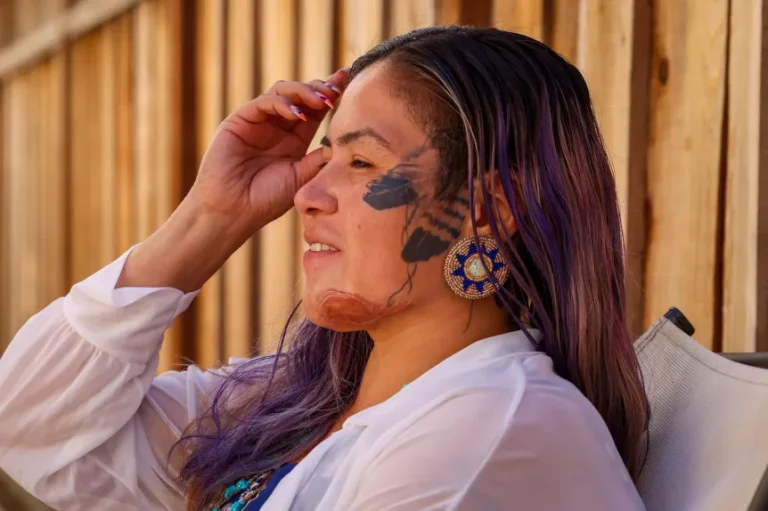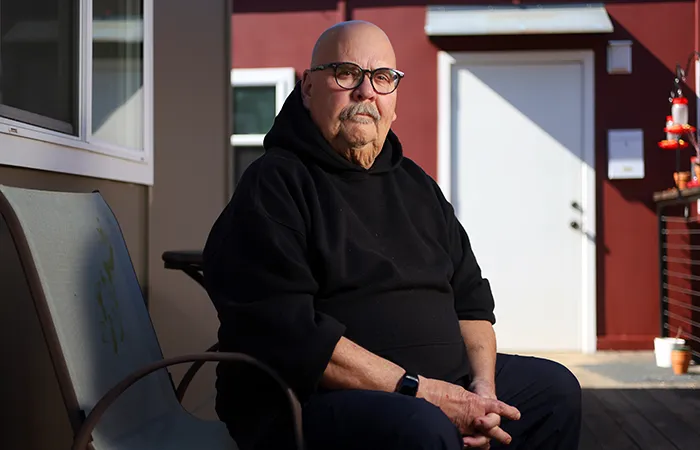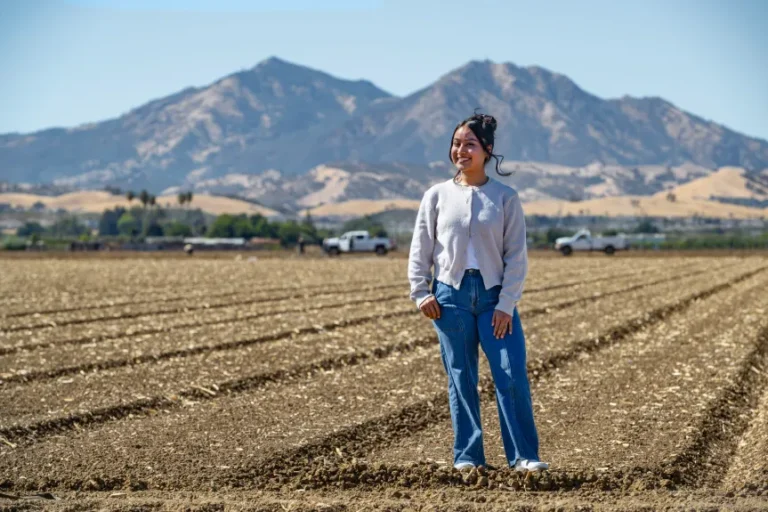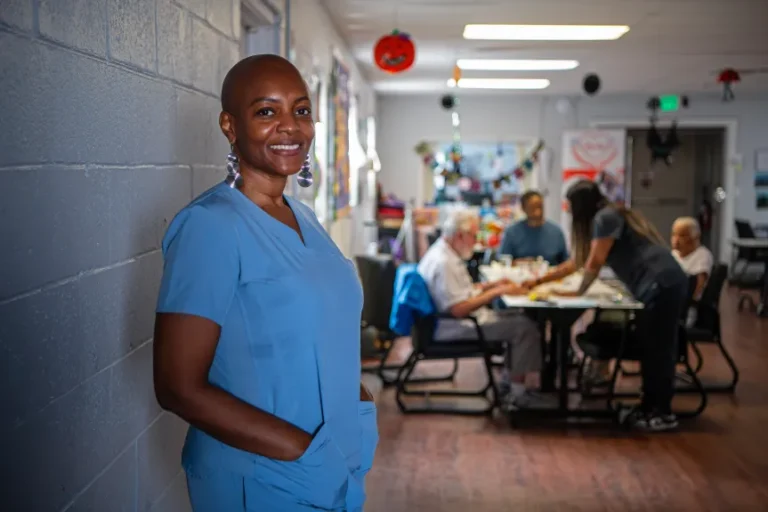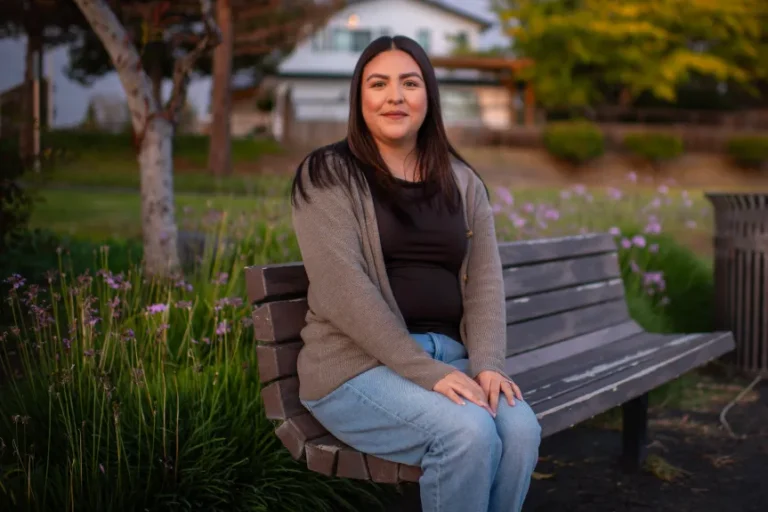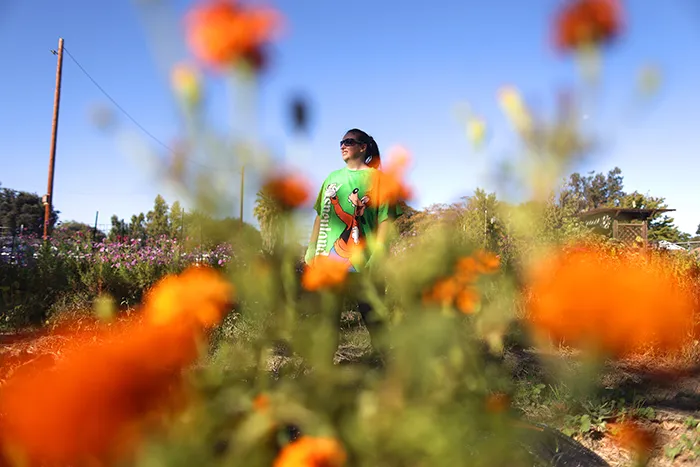

Jennifer Thomas works in the Sunflower Hill Garden at Hagemann Ranch on Friday, Oct. 10, 2025, in Livermore. The program at Sunflower Hill Garden offers educational, and life skills training for adults with intellectual and developmental disabilities. (Aric Crabb/Bay Area News Group)

2025

Meet the Bay Area nonprofit creating housing for people with special needs

Roughly 26,000 people in the Greater East Bay have intellectual and developmental disabilities. Sunflower Hill helps them live independently.

Bay Area News Group

At age 38, Jennifer Thomas is leading a life more full than many.

When she’s not working at an East Bay grocery store, she’s tending a garden, honing her music skills and learning recipes to cook. An athlete who’s medaled in track and field and javelin throwing, she helped her bocce team snatch bronze at the Special Olympics Northern California Summer Games in 2024.

And when she’s not doing all that, she’s kicking back with her friends at Irby Ranch, an affordable-housing community in Pleasanton for people with intellectual and/or developmental disabilities (I/DD).

“I have lived at Irby Ranch for five years now — I was one of the first residents,” Thomas says. “I actually lead some of the activities there, like a jam session where I bring my own guitar. That’s kind of cool.”

Irby Ranch is a 30-unit complex loosely designed on the model for senior homes, providing independent living to Tri-Valley residents with conditions like autism, Down syndrome, cerebral palsy and epilepsy. It’s run by the Pleasanton nonprofit Sunflower Hill, whose mission is to provide affordable apartments and social programs to folks with I/DD.
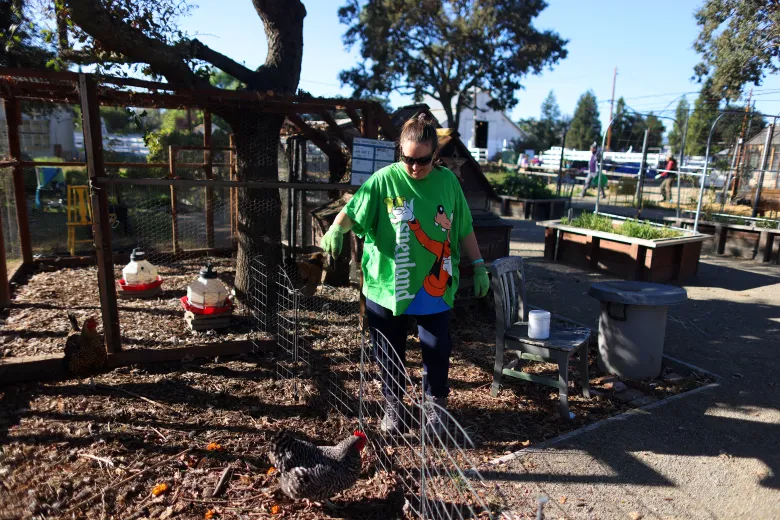
Jennifer Thomas watches over a chicken coop. (Aric Crabb/Bay Area News Group)

These things are in great need. Just look at Sunflower Hill’s plans for the near future: The organization hopes to soon shepherd through two other similarly designed residential communities — one in Dublin and another in Lafayette, the latter of which recently received a $19.5 million award to cover roughly half of its building costs.

“Our mission is to develop as many communities as we can in that mode of operations,” says Susan Houghton, president of the board of directors at the nonprofit.

Chances are, unless you have a child or know somebody with special needs, you don’t think about the population that much, says Houghton, whose adult son was diagnosed with autism at age 2.

“There are 26,000 individuals with intellectual and developmental disabilities in the Greater East Bay, meaning all of Alameda County and Contra Costa County. Of those, 80% live with their parents or family members and only 20% are employed,” says Houghton, citing statistics from the Regional Center of the East Bay.

She and other parents formed Sunflower Hill in 2012 to address a pressing question: How could they provide for their kids in the long term, when they might not be around or able to any longer?

People with I/DD often can’t work and receive only a small amount in government benefits. It’s often not enough to cover basic rent in one of the most expensive real-estate markets in the country. Then, when you throw a disability into the mix that makes it difficult to handle everyday tasks — doing laundry, say, or grocery shopping — it can be extremely difficult to live independently.

“My son Robby is pretty innocent. He thinks Disney princesses are real,” Houghton says. “He can make his own waffles in the morning and can make a sandwich for lunch. But if somebody knocked on his door and said, ‘Give me all your money,’ he would hand them his wallet. And he would want to make sure they were happy afterward, because he’s so innocent.”

Jennifer Thomas weeds the garden. (Aric Crabb/Bay Area News Group)

At Irby Ranch, the architecture is tailored to provide extra support. There are nooks in each hall, similar to residential-advisor rooms in dorms, where caretakers can stay while providing supportive services like cooking assistance and sleep monitoring (for those prone to seizures). There is a fitness room, a maker space and a large community room – places where residents can engage in all kinds of activities from exercise lessons and art classes to pet therapy with Humane Society volunteers.

Sunflower Hill is all about the social calendar. On any given day, the activity schedule is loaded, and any adult with I/DD in the Bay Area (not just residents) is welcome to attend. The options are meant not just for personal enrichment or learning life skills, but also for a more fundamental purpose: human connection.

“It’s super-important for people to have activities throughout their day that are exciting and that they also may be able to learn something from,” says Olivia Christensen, the organization’s program manager. “It can be hard to put yourself out there and meet new people. But when there are programming and social opportunities available, it allows for social interactions to happen more easily.”

Aside from decorating her room for the holidays, Jennifer Thomas leads a walking club and works at an Irby Ranch farmer’s market. “It’s a lot of fun,” she says. “And it’s helped me become more responsible.”

A crown jewel of Sunflower Hill is a one-acre organic garden that its residents manage in Livermore. They harvest more than 5,000 pounds of produce each year, which goes to local nonprofits – a women’s shelter, a food bank that provides meals for seniors, an organization that serves cancer patients. Some amateur gardeners have learned enough about seeding and mulching that they’ve gone on to get jobs at a local plant nursery.

Sunflower Hill accomplishes all these things despite receiving no regular funding from the state or federal government – just awards, donations and the like. This year, the organization hopes to use its Share the Spirit funds to continue work on its garden; hiring gardeners and providing supplies aren’t free, after all. Houghton says that the garden’s donated produce helps 1,500 families and individuals who deal with food insecurity each year.

And of course, Sunflower Hill has its ambitious plans for its upcoming residential communities, because that need isn’t going away anytime soon.

“We’re seeing more and more folks with intellectual and developmental disabilities who want to participate in our programs, and want to have an apartment at one of our communities,” Houghton says. “There are 169 people on the waiting list for Irby Ranch, for 30 slots. Chances are, those folks unfortunately will be waiting a very long time.”
How to help

Donations to Sunflower Hill will support the nonprofit’s programs at its Hagemann Ranch garden in Livermore, offering 10 months of programming for one of the 10 classes that meet regularly at the garden. The program provides fresh produce to 1500 families and individuals facing food insecurity and vocational horticulture opportunities to 200 people with intellectual and/or developmental disabilities each year.

Goal: $10,000

On donation page, please select
"Sunflower Hill"

2025

This holiday season, make their wishes come true!

2025

An East Oakland teen’s grades plummeted during COVID’s worst days. Then he met a soccer coach.

Donations to Oakland Genesis Academy will enable the nonprofit to provide soccer coaching and play opportunities alongside academic support to 275 boys and girls from ...
Read More →
2025

Animal Fix Clinic brings hope to those who fear losing their pets

Donations to Animal Fix Clinic will allow them to expand their operations from 4 days per week to all seven days. This would provide services ...
Read More →
2025

At the Bay Area Rescue Mission, a mother finds reasons to live

Donations will help the Bay Area Rescue Mission provide 75,000 hours of case management, life skills classes, trauma-informed counseling and vocational training to women living at ...
Read More →
2025

Finding shelter, and a community, when she needed it most

Donations to Winter Nights Family Shelter will enable the nonprofit to provide financial assistance to around 10 homeless households for urgent needs, like car repairs, ...
Read More →
2025

For children exiting foster care, this local organization offers a critical lifeline

Donations to First Place for Youth will help fund their programs that assist young people who grew up in foster care with safe, stable housing ...
Read More →
2025

From unredeemable to trusted mentors, Academy of HOPE gives former inmates a soft place to land

Donations to Options Recovery Services will be used to enhance the Academy of Hope, a reentry program that provides up to 24 former inmates at ...
Read More →
2025

Goodness Village In Livermore helps the formerly homeless rebuild their lives

Donations to Goodness Village help to cover staff costs needed to provide 24/7 care at this permanent supportive housing community for formerly unsheltered people, which ...
Read More →
2025

Hijas del Campo helps to uplift farmworkers in east Contra Costa County

Donations to Hijas del Campo will enable the nonprofit to buy and distribute 500 food bags to 378 low-income farmworker families in Contra Costa County ...
Read More →
2025

How a new East Bay nonprofit is caring for caregivers

Donations will help Caregiver OneCall serve about 125 caregiver families in Alameda and Contra Costa counties with 24/7 support calls, caregiver wellness kits, respite-focused activities ...
Read More →
2025

Immigration Institute of the Bay Area makes citizenship goals a reality

Donations to Immigration Institute of the Bay Area will help fund 250 legal immigration consultations and cases including naturalization, DACA, Employment Authorization Document and U ...
Read More →
2025

Las Trampas helps those with developmental disabilities advocate for themselves

Donations to Las Trampas will cover salaries, onboarding and training for increased staffing at the nonprofit, enabling 20 more adults with intellectual and developmental disabilities ...
Read More →
2025

Meet the Bay Area nonprofit creating housing for people with special needs

Donations to Sunflower Hill will support the nonprofit’s programs at its Hagemann Ranch garden in Livermore, offering 10 months of programming for one of the ...
Read More →
2025

Mercy Brown Bag Program delivers health and hope to East Bay seniors

Donations to the Mercy Brown Bag Program enable the nonprofit to buy food for low-income older adults, providing a full month of nutritious groceries at ...
Read More →
2025

Nonprofit offers enrichment for the neurodivergent

Donations to the Social Justice Sewing Academy will support The Social Connection’s mission to provide innovative social, educational, and vocational opportunities for neurodivergent adults in ...
Read More →
2025

Paws In Need helps families pay for critical pet care

Donations to Paws In Need will help the nonprofit to keep animals safe, healthy and out of shelters by providing low-cost spay and neuter services ...
Read More →
2025

Reaching to those who want to teach amid Bay Area educator ‘shortage’

Donations will help Early Childhood Education Substitute Teacher Empowerment & Placement (ECE STEP) to expand its East Bay operations, training and supporting 6 substitute teachers ...
Read More →
2025

Spectrum Community Services brings companionship, valuable help to Tri-Valley seniors

Donations to Spectrum Community Services will provide about 1,670 home-delivered meals to low-income, homebound seniors in the Tri-Valley area, offering them nutrition, human contact, and ...
Read More →
2025

Trinity Center in Walnut Creek was ‘light at the end of the tunnel’ for homeless couple

Donations to Trinity Center Walnut Creek will help the nonprofit to pay for space to expand its Workforce Development Program, set to accommodate up to ...
Read More →
2025

Unlocking higher education for low-income, first-generation tutors and students

Donations to Elevate Tutoring will enable the nonprofit to provide 400 hours of free STEM tutoring and mentorship to up to 200 K-12 Alameda County ...
Read More →
2025

Where Bay Area human trafficking survivors turn for help

Donations to Love Never Fails will help the nonprofit provide 75 teens and adults who are trafficking survivors and vulnerable individuals to access safe, restorative ...
Read More →

Previous Stories