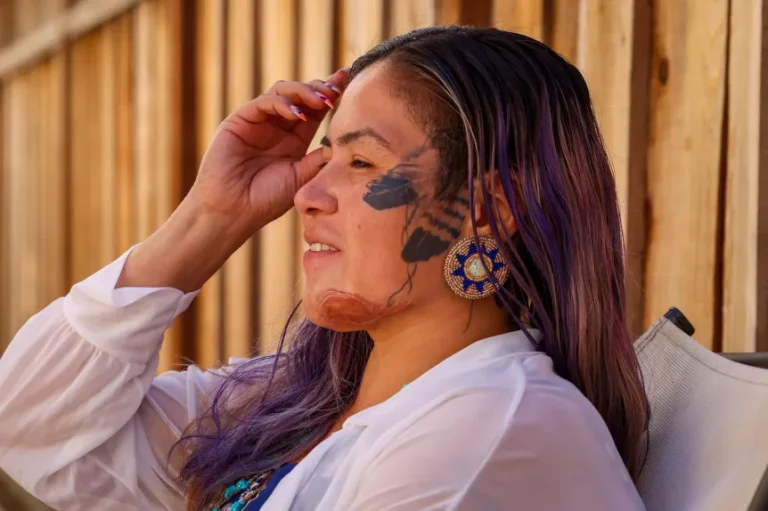

In the mid-2010s, a woman known as Tish was trapped in a seemingly endless cycle of human trafficking, her exploiter keeping her young son hostage so she would do his bidding throughout each day and night.
Tish had one advantage — her attention to detail. She silently kept track of his routine and came up with a plan to escape.
“He left me alone with (my son) for three hours, so I knew I would have that small window to work with,” she said in a recent interview. When the opportunity came, she said, “I took my son and whatever I could carry and I started walking,” and was able to slip a note to her neighbor, who helped Tish put some distance between herself and the man who’d kept her under his control for years.
That was the first day of a process that led Tish out of the Central Valley, to the Bay Area, where she found refuge through a nonprofit called Love Never Fails. In Love Never Fails, Tish found stability through a brand new residence for trafficking survivors, then started spending time at its East Bay offices.
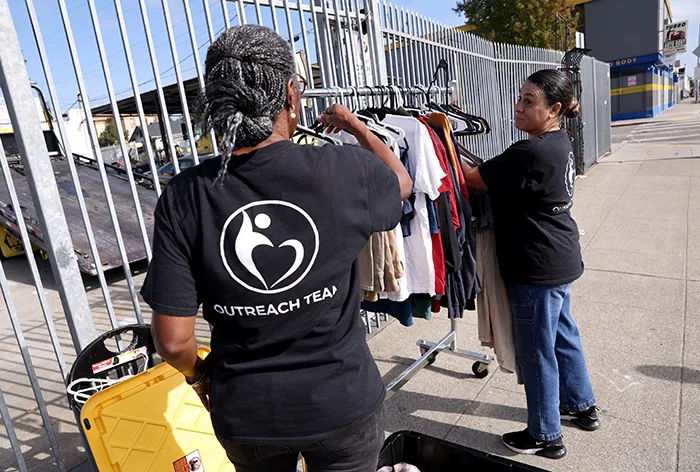
She was sorting items by color in the backroom when the organization’s executive director, Vanessa Russell, approached her.
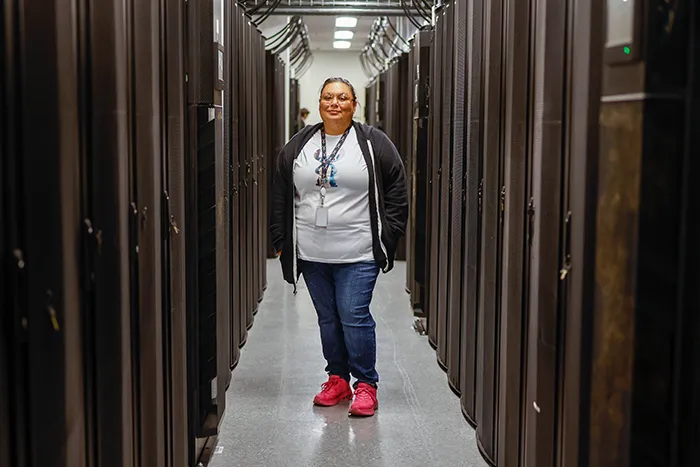
“I said, ‘You know, Tish, I think you’re an engineer,’ ” Russell recalled in a recent interview. She was right. Today, Tish works in Silicon Valley as a network engineer for Cisco Systems, after graduating at the top of her class in a tech academy run by Love Never Fails.
“I was settled with being a manager at Target or something, I thought that was going to be my peak and, ‘I’ll be ok with that,’ ” Tish said. “I didn’t see myself doing something like this at all — my esteem just wasn’t there yet. So having Vanessa see that potential in me before I even saw it, that opportunity was special.”
Based in Hayward but with offices all over the Bay Area, the organization is dedicated to providing a safe haven and a better life for adult and child trafficking victims.
Russell founded the organization in 2011, after experiencing the challenges of rescuing someone from trafficking firsthand. At the time, she was a single mom and a “tech nerd,” who worked as a dance instructor teaching kids and young adults. When one student, a 14-year-old girl, stopped showing up to class, Russell didn’t think much of it — until the girl was brought to her months later by a Samaritan who’d found her on International Boulevard in Oakland, “wearing hardly anything,” and in distress.
“She began to tell me about all these horrible things that had happened to her — she’d been raped, and beaten and shot at, and all these horrible things,” Russell said. “But I thought, ‘I have you now, we’re together, I’m not going to let anyone else hurt you’ — very kind of naive about human trafficking.
“I took her home that night and she was back with her trafficker the next day. I was like, ‘What happened? We weren’t going to go back to this.’ And then I learned about trauma bonding and all the psychological warfare that kids go through.”
Russell’s early experience typifies the frustrating work of rescuing victims of human trafficking, which is defined by state law as people either coerced, forced — or unable to agree given their young age — into sexual servitude. The dynamics at play are similar to domestic violence, where survivors are often re-victimized repeatedly, stigmatized if they cooperate with police, and threatened, beaten, and sexually assaulted by pimps and johns. Recent Bay Area cases tell stories of girls who were trafficked by multiple men in quick succession, such as the case of a man was successfully prosecuted last October for trafficking three girls in Los Angeles, Vallejo, and Oakland; all three of the victims had other traffickers who weren’t caught.
When adults are trafficked, their cases are more regularly classified as acts of pimping and pandering, a less serious offense than human trafficking, where the victims are assumed to have had some agency. Tish said she was arrested in prostitution stings before she escaped her trafficker, another pitfall of a world where victims aren’t always recognized, even by the people trying to stop trafficking from happening.
Up against this phenomenon for the first time, with no prior experience, Russell started to grasp how overwhelmed she was.
“But my faith really is what came into action. I began to pray about what to do, and in my time of prayer, I felt very strongly that all I needed to do was love her and that would be enough,” Russell said. “So that’s what I did — every time she would call, and there were many times, I would just follow the love to tell her what to do or offer help. Eventually, she got out, and one of our volunteers actually adopted her. She graduated from high school with honors … she’s doing much, much better in her life.”
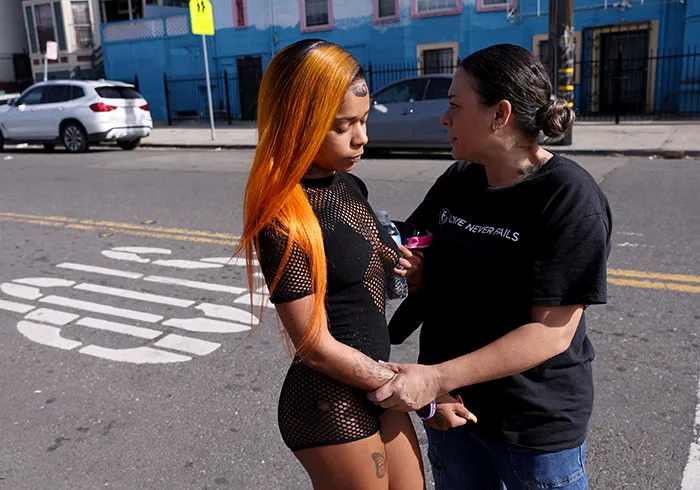
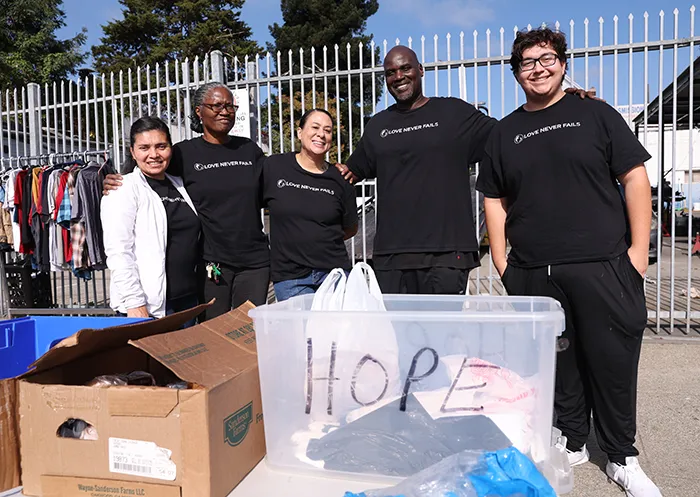
From there, Love Never Fails became her life’s work. The organization now assists 10,000 people each year in Northern California, through housing, education, empowerment classes, and one of the toughest parts of the job — outreach, where volunteers to go homeless camps, high-prostitution neighborhoods, and other areas where sexual exploitation happens at higher rates to offer victims a way out. The overwhelming majority of their staff and volunteers are survivors.
But sometimes the most meaningful measures are also the ones that are less quantifiable.
“I needed help in different ways. It wasn’t just somewhere to live. It was emotional, it was physical, and it was spiritual as well,” Tish said. “It’s not just a program about housing women or taking people off the street … Love Never Fails didn’t just provide a home, they also provided the stability that I needed. There’s a bigger umbrella there than just saying, ‘We rescued someone.’”